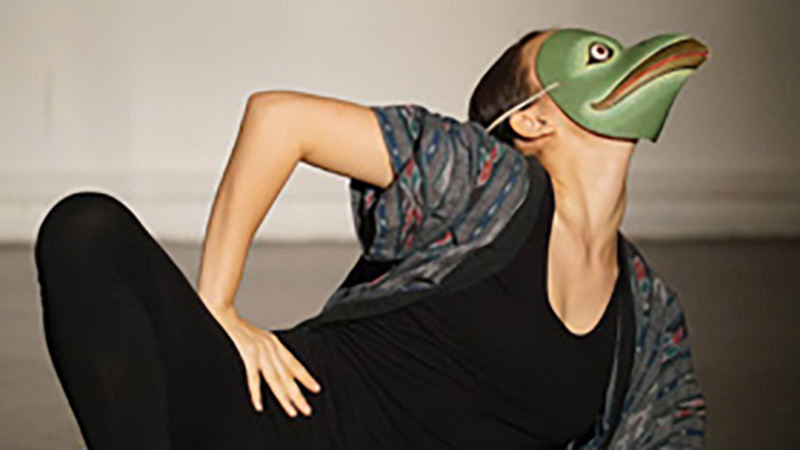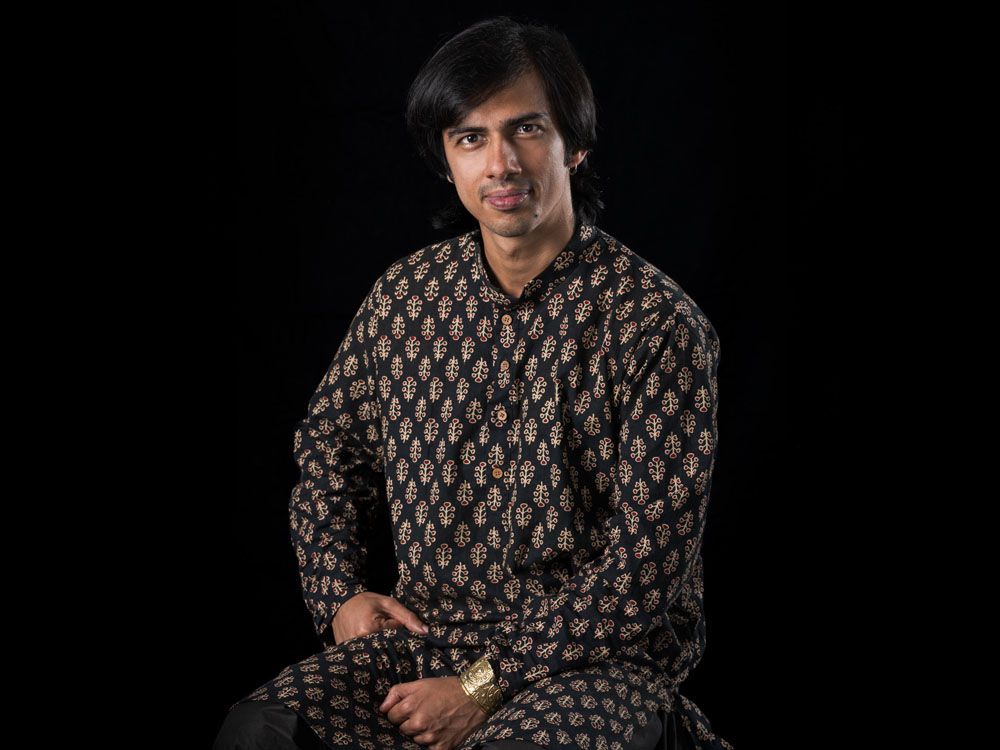
Sanat Mehta is a movement and theatre artist whose practice bridges dance, theatre, and intercultural performance.
His notable works include the solo performance, Maintain Distance (2020), ‘Dr. Astrov’ in Uncle Vanya (2019), A Man Alone with his Destiny (Butoh, 2022), Shadow and the Spirit (Butoh, 2024), Entangle (Butoh & Contact Improvisation, 2025) and No Particular Order (2025). Driven by curiosity about acting pedagogies, somatic wisdom, and embodied spirituality, Sanat investigates these concepts through the lens of Asian performing arts and their dialogue with global theatre and dance traditions. His vision is to integrate a holistic understanding of the living body into artistic practice, fostering both individual and collective expression.
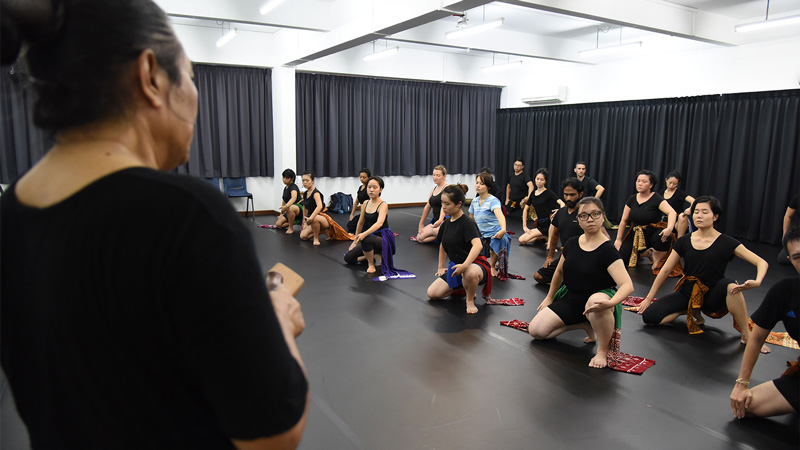
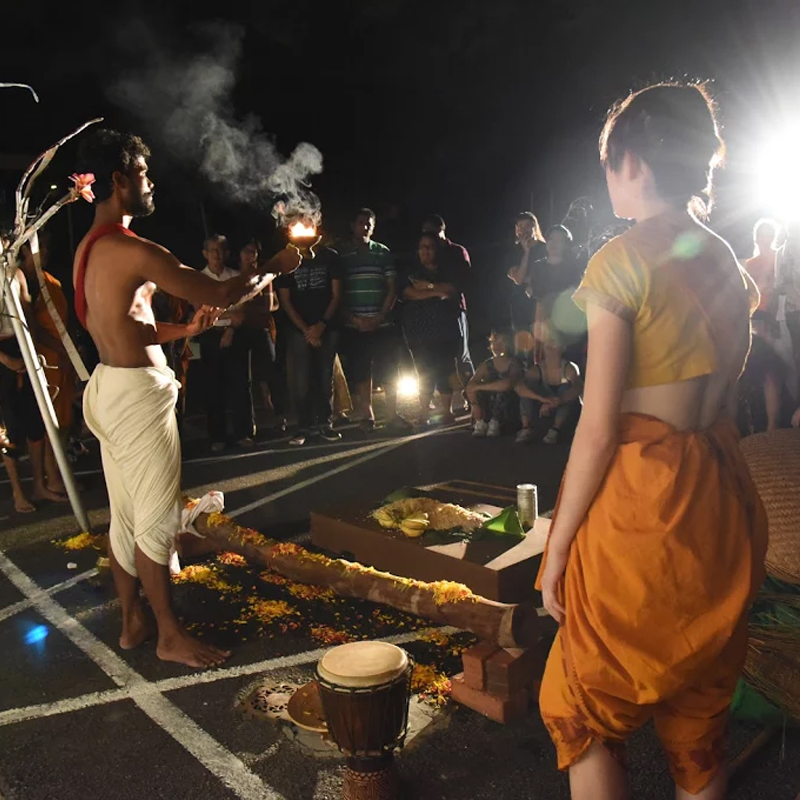
He has facilitated educational programmes across South Asia, sharing knowledge on self-transformation through the performing arts. His empirical research spans Movement Meditation, Butoh, Contact Improvisation, Taiji, and Flow Arts, drawing inspiration from Noh Theatre, Wayang Wong, Kutiyattam, and Jingju, as well as Suzuki, Mask Work, and other Acting methodologies he has studied at the Intercultural Theatre Institute.
Sanat is a recipient of the Tan Chay Bing Education Fund Scholarship and a beneficiary of the Möbius Fund, a revolving loan fund for actor-students.
What is it like to train here at ITI?
This space has provided me with a much greater learning curve for my craft of acting.
What I have learnt the most from all my teachers is their commitment and the ability to keep going. Non-stop. With us. My teachers, at many times, have given me hope, courage, devotion, and at times, frustration and even confusion, but it has been a transforming three years.
Whereas, with the classmates, I got to learn patience and understand how different personalities from different cultures can come together to work, and bring diverse perspectives to the table.
ITI, in a nutshell, has provided me with life-long experiences and supported me with immense growth not just in training but also in life as an artist.
Think back to your first day here, and now as we approach your last few weeks. What are some of the thoughts and emotions that come up?
Three years flew by like a passing breath. I feel bitter-sweet. Mixed with excitement and fear as I take the unknown path ahead.

Tell us how you first came to know about ITI. What made you choose this school over others?
I was once researching on psycho-physical acting, and I read about Phillip Zarrilli, and through his name, I found ITI. The curriculum of the course seemed very interesting, which got me interested to join ITI.
What were you doing before coming to ITI?
I was teaching theatre, dance and movement educational workshops in Goa, India, performing as an actor and movement artist, as well as freelancing in videos and films production as creative producer.
How does training in traditional performance forms have relevance in contemporary practice?
What we do now, the way we live now, has its own history. And so do the traditional forms, in the contemporary times. Contemporary practices has been born out of, or is shaped by the traditions, and thus it is important for us to understand the history, the traditions, the cultures, which has brought humanity to the current times. And so, training in traditional forms enriches one’s perspective, and provides a deeper understanding of the lived embodied realities, aesthetic values, and opens up the possibility of experimentation in contemporary practices. It makes us see contemporary work through a new lens of the traditions — our histories, lineages, and lived cultures.
How has what you’ve learnt here shaped or changed you as an actor and as a person?
In many good ways. I’m more confident.
Describe your biggest takeaway from the ITI experience.
A productive learning growth among soulful artists.
Training in traditional forms enriches one’s perspective, and provides a deeper understanding of the lived embodied realities, aesthetic values, and opens up the possibility of experimentation in contemporary practices.
What are your plans after graduation?
When I graduate from ITI, I am looking forward to continuing my community building work through arts and creations. I aim to become a cultural entrepreneur. I would personally like to erase the notion of ‘Poor Artists’ and hence, I’d like to contribute to the arts infrastructure in Singapore, India, Asia and Global South in the ways I can. As an artist, I’d also like to keep creating art through a healthy and sustainable process, by further developing my embodied practices in theatre and movement arts, and continue researching on applying somatic techniques to training methodologies for actors and dancers.
What would you say to a new student or someone thinking of joining ITI?
I’ll give a pat on their back. And whisper in their ears “It will be the time of your life!!”
Any special thanks or messages?
Yes, I would like to thank every supporter — I’m truly grateful for the help I’ve received for my studies. It means a lot to me!


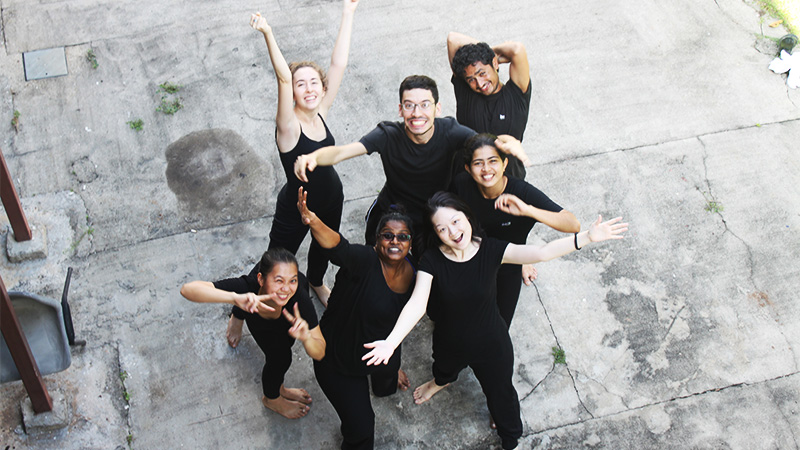
Profile photo by Joseph Nair; production photo of No Particular Order by Wesley Loh


UEN Charity/PEI Registration No: 200818680E | Registration Period 13 Jul 2024 to 12 Jul 2028
Intercultural Theatre Institute Ltd is supported by the National Arts Council for the period from 1 Oct 2025 to 31 Mar 2026.
This website is hosted by APC Hosting.

© 2026 Intercultural Theatre Institute. All rights reserved. | Disclaimer | Privacy | Sitemap