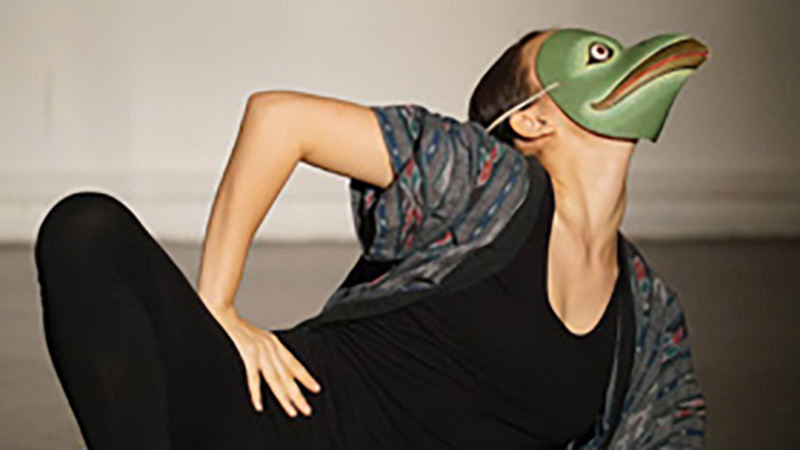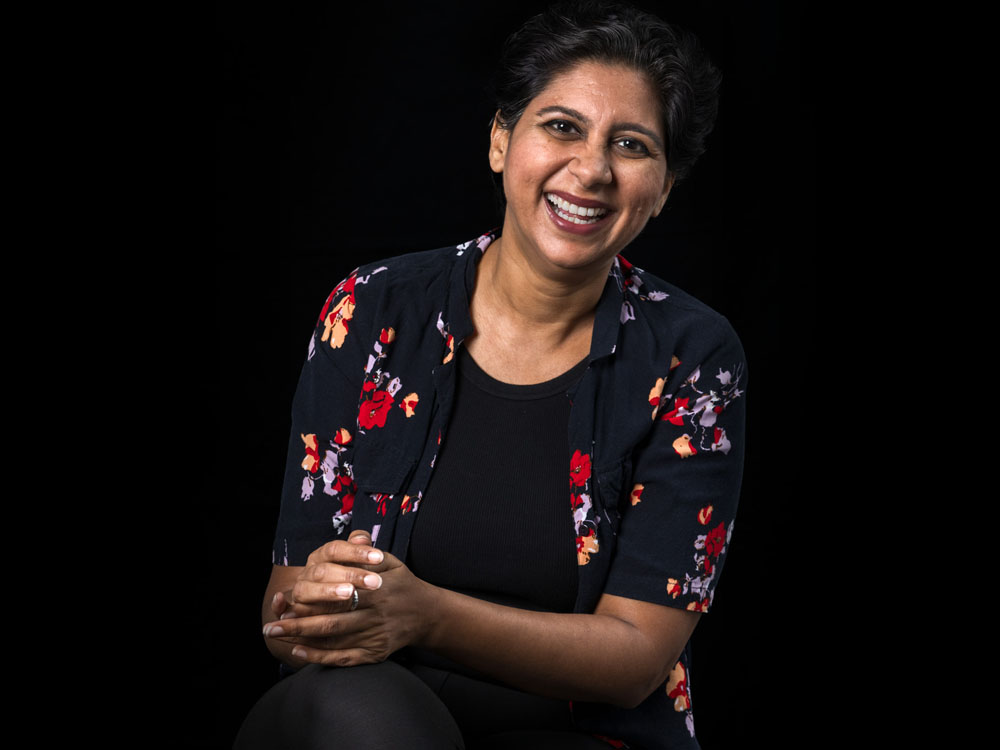
Aditi Venkateshwaran is a contemporary performer — an actor, dancer and a choreographer with a keen interest in storytelling, writing and travel. Trained in the Indian Classical dance form of Kathak as well as Hindustani Classical music, Aditi has worked in the performing arts field since she was a child. She directed her first full-length dance theatre production — In Transit (2017), followed by Fall Again | Fly Better (2020), a one-woman show, which toured to various festivals around India, Sri Lanka, Nepal and Europe. Her recent work, Constant Acts of Disobeying (2021), is an investigation into the feminist movement and the mandates of gender and sexuality.
She received the Pandit D.V Paluskar Award for Kathak by the Sharda Sangeet Academy, Mumbai, as well as the Rangasetu Fellowship by the Maharashtra Cultural Centre, Pune. Aditi’s work traverses the traditional and the contemporary and shows an inclination towards discovering an interdisciplinary approach to performance practices in her country. She looks at people around her for inspiration and is deeply interested in the stories they have to share.
Aditi is a recipient of the Tan Chay Bing Education Fund Scholarship and a beneficiary of the Möbius Fund, a revolving loan fund for actor-students.
What is it like to train here at ITI?
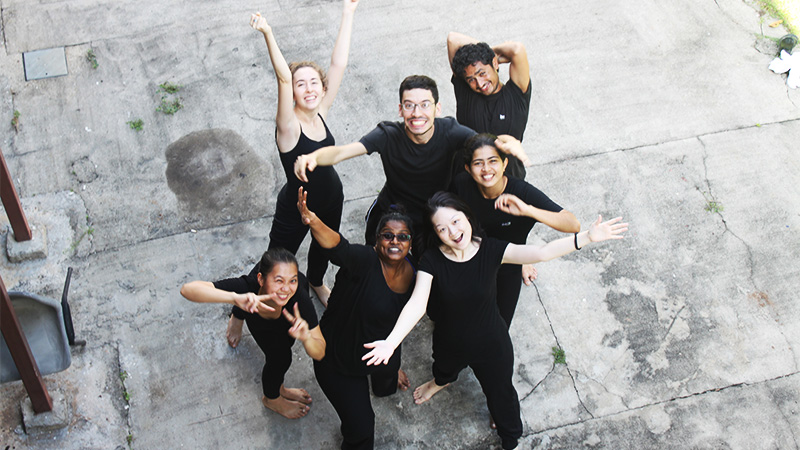
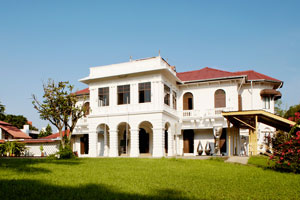
“My failure in life begins on the steps of Emily Hill (Mount Emily)!” — I have often said this to myself in the past three years. It's hard. it's very, very hard. But at the same time, it's realising that the world is much more richer and diverse than you imagine it to be. There are similarities and differences that need to be celebrated. Working with teachers and students of various cultures opens your perspectives in ways you cannot fathom. ITI is home away from home. There is beauty in the chaos, often at the beginning — like a family of eccentric, esoteric individuals who want to change the world. The conflict and drama that unfolds is wild. Yet somehow, gradually, over a period of time, you find a way to belong and what follows is magical.
Think back to your first day here, and now as we approach your last few weeks. What are some of the thoughts and emotions that come up?
“Life has been exceedingly kind and generous to me!” - Kuo Pao Kun
On the first day of school we all gathered around a circle, as always, and what Sasi said that day has stayed with me till today:
“I hope you can find it in your heart to respect everyone around you and if possible, extend the respect to care.”
These two statements, by Pao Kun and Sasi, have shaped my three years here and shall continue to inspire me in the future. Sitting in a room full of curious-eyed strangers, awkwardly smiling at one another, I remember thinking — I’m exactly where I need to be. Within the first week itself, I was amazed at everything that was being shared so generously by the teachers, the staff, and the fellow students. Honestly, I was a bit afraid of how much I could take in and what I had to let go of, because there was always too much. But let’s just say, I was exactly where I needed to be, then and now.

Tell us how you first came to know about ITI. What made you choose this school over others?
I first heard about ITI ten years ago when I saw a performance directed by one of our alumni, Sankar Venkateswaran. I vividly remember being very inspired by the work. Then followed years and years of stalking the ITI website (which I absolutely love!) and the work that was being done by many other graduates across the world. I was deeply drawn to the syllabus that is offered here, which I found was quite unique and despite my hesitation to enroll into a three year full-time diploma, I found myself going through the work ITI was doing again and again. It only took me about ten years to convince myself to get here, and I’m glad I did, because life without this training is quite hard to imagine at the moment!
What were you doing before coming to ITI?
Just floating somewhere between dance and theatre, my curiosities being driven mostly by art and science. I was raised by strong independent women in a small town in India, who made me love the stars and the stories of my land with all their might. We’d go without water supply for days, no electricity for hours. So we’d sing and dance to kill time. That’s where my first lessons in art came from.
At 18 I started working for a radio station as a radio jockey, hosting the morning show on weekdays and performing dance and theatre on weekends. This continued for about a decade. Earned handsomely, got moderately famous, felt completely washed out and then quit my job to travel the world, went broke and became a full time artist. Then the story continues — performing, creating, producing, managing, curating. I was doing everything and anything that would keep me close to the stage and shall continue to do so!
The essence of the form, the rigour and discipline of the structure within a traditional system — which is often very hard to practise — provokes and inspires us as contemporary artists to find our own unique voice. These forms also compel us to look within, go back to our roots, find our grounding and then grow from there.
How does training in traditional performance forms have relevance in contemporary practice?
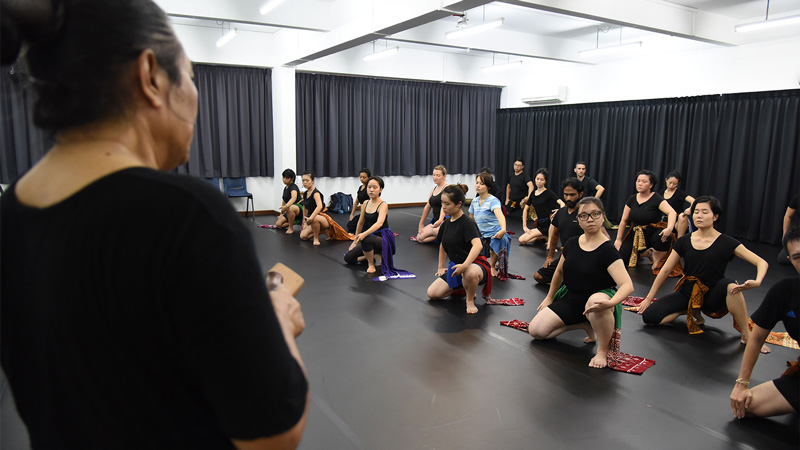
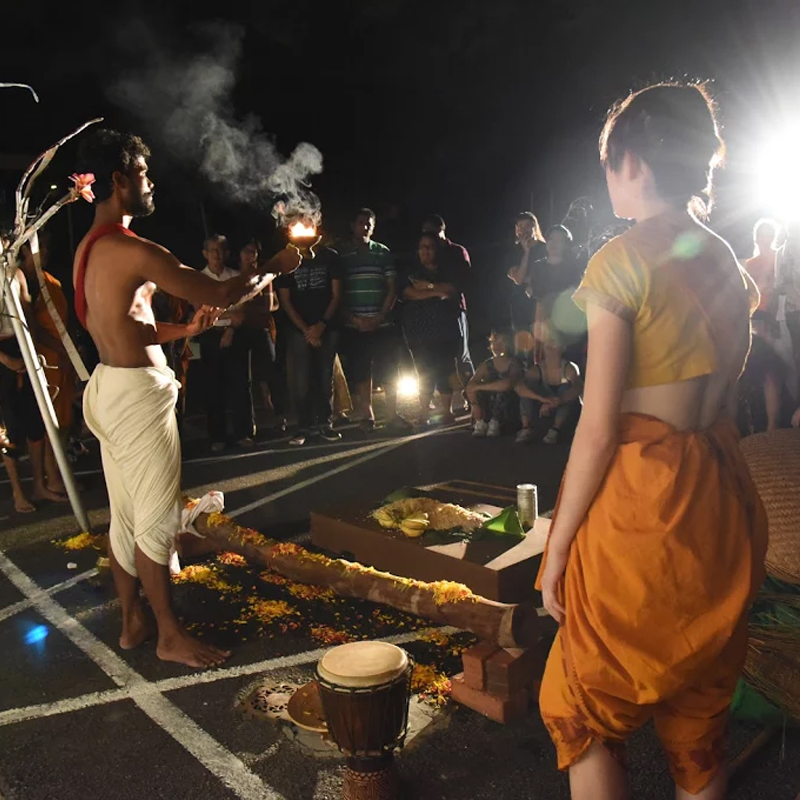
At ITI, we train and immerse ourselves in four traditional forms from Asia, which means we are deeply confronted with questions around belief, faith, rituals, artistic practices, techniques, skills and the correlation between them. Oftentimes, it’s too complex and layered to understand. My own journey with finding and questioning my faith and practices has been absolutely chaotic. I was raised by women of science and men of many gods, and these worlds always clash, mostly exposing the contrasts and the ironies. Which is essentially the world we live in today!
The essence of the form, the rigour and discipline of the structure within a traditional system — which is often very hard to practise — provokes and inspires us as contemporary artists to find our own unique voice. These forms also compel us to look within, go back to our roots, find our grounding and then grow from there. For me, it is the Post Modular Lab after each traditional form that really drives us to reflect and investigate deeper into the relevance of these forms. How they impact and inspire our own work, still remains the most pivotal part of the training at ITI.
How has what you’ve learnt here shaped or changed you as an actor and as a person?
So much of my training has just been about unlearning, about dusting off old patterns and habits to make space for deeper explorations. How much we accumulate over the years, how little we actually know about the self. For so long, I pushed myself to test my limits, that accepting my limitations felt like failure. There was always a task to prove, something to be validated, and someone to impress. Slowly, I understand the scale, the task at hand and learn to pace myself. I am no longer burdening myself with unrealistic expectations and I’m discovering joy, curiosity, and learning new skills.
Not knowing is grounding in a different way, and beginning from nothing is always an invitation to fly. I’m learning to say “I don’t know” and in exchange, learning way more than when I had to know everything.
Describe your biggest takeaway from the ITI experience.
Life lessons from my teachers and some random journal entries.
Make of it what you will, in no particular order —
Consistency is everything!
Get out of your own damn head.
Your responsibility towards yourself is constant.
No shame in asking for help, my friend, no shame at all!
Do whatever it takes to offer your best version of the self.
When you don’t know what to begin with, start with the truth.
Don’t take yourself too seriously. Laugh at yourself more often!
Nothing is permanent, especially the best and the worst attempts.
On good days, practise with awareness. On difficult days, practice nonetheless!
I’m less afraid of failing more than ever and I guess that’s been my biggest takeaway and accomplishment so far.
What are your plans after graduation?
Still catching my breath, still floating around, still hungry to perform, travel to the quiet corners of the world that I know nothing about but mostly to go back home to my little niece and to sing and dance with her.
What would you say to a new student or someone thinking of joining ITI?
This is your place if you are ready to be honest with yourself! You must live the truths you discover, break your old rules, defy logic, be the change. When you refuse something, it’s very hard to continue. The school is difficult not because the training is, but because the teachers insist you train hard with utmost sincerity, precision and specificity. Your teachers will journey with you, in your pain, heartbreaks, joy and success. The responsibility is huge and wonderful.
The universe will raise the bar, you will try to jump higher. Sometimes you will fall flat on your face, but often with practice, the landing feels just about fine!
Any special thanks or message?
Gratitude towards all my teachers, especially Sasi, Simon, Andy, Chin Huat, Karen and Wan Ching. All our traditional master teachers, guest directors and everyone in the office. I would’ve never come this far had it not been for these people.
In a post-pandemic world, when everything seemed uncertain, investing in a three-year professional diploma was terrifying. I would also like to express my sincere gratitude towards the Tan Chay Bing Fund Scholarship for believing in me and turning my dream into reality. The scholarship gave me the confidence to survive and continues to give me hope and resilience to embark on my artistic journey ahead.


Profile photo by Joseph Nair; production photo of No Particular Order by Wesley Loh


UEN Charity/PEI Registration No: 200818680E | Registration Period 13 Jul 2024 to 12 Jul 2028
Intercultural Theatre Institute Ltd is supported by the National Arts Council for the period from 1 Oct 2025 to 31 Mar 2026.
This website is hosted by APC Hosting.

© 2026 Intercultural Theatre Institute. All rights reserved. | Disclaimer | Privacy | Sitemap